Showing posts with label barriers. Show all posts

Monday, January 3, 2011

Everything you wanted to know about abortion hosting but were too afraid to ask


I know that sometimes us abortioneers take for granted that we understand the ins and outs of all things abortion and we leave our readers confused or seeking information. In past blogs we have written about the basics of 1st trimester procedures, 2nd trimester procedures, medical abortions, etc. I wanted to take the opportunity to go over some commonly asked questions about abortion hosting. Listed below are the questions I get most often, but feel free to ask about anything I forgot in the comments section.

How do women get connected with volunteer hosts?

Women usually do not get linked up with our service until their first day at the clinic (the women we host are almost always having 2-day second trimester procedures). When they arrive at the clinic they often find out that the cost of their procedure is more than they anticipated and they no longer have hotel money. Every now and then women know in advance that they will need hosting but it is usually the day of that everything transpires. The clinic staff will screen the woman to make sure she is a good fit for volunteer hosting and then the clinic staff will contact our volunteer hosting service to let us know there is a woman who needs to be hosted that night.

How do women get to your apartment?

I always go to the clinic to meet the women at the end of their first day. The law requires that women have someone pick them up from the clinic after being administered anesthesia. In addition, many women are not familiar with my city and would have a hard time navigating to find my apartment. When I go to the clinic to meet them the clinic staff always introduces us and the women are eager to get out of the clinic and head to a relaxing home and eat some food. I always offer to get a cab for the women, even though I rarely take cabs myself. Luckily I do not live too far from the clinics we work with so the cab ride is not super expensive. I know this is an added cost for myself but I try to put myself in their shoes and I think it would be hard to take mass transit during rush hour after all the anesthesia and long day at the clinic.

Do you cook meals for them?

Every woman I have hosted has either wanted to order takeout or has brought some food with her. After midnight they need to be NPO (no food or drink in their system) so breakfast is not an issue. In regards to the meals, I always offer to pay and the women usually appreciate and accept the offer. The money for the meals (and cabs) comes out of my own pocket and for me I see it as similar to a monthly donation that I give to improve abortion access.

Has anyone ever started passing the pregnancy or bled on your bed?

No! I have heard 1 or 2 stories about this but it has never happened to me. I knew when I signed up for this gig that it is a possibility, but it is one I am willing to accept.

Aren’t you worried that strangers will steal from you????

It definitely crosses my mind, just like it would cross my mind if I left my car door unlocked over night. Any person is at risk for being mugged or having property stolen from them at any time anywhere. I like to have faith in people and not assume the immediate worst. If I lived my life expecting the worst out of people that would be pretty shitty of me, right? Most of the women I have hosted (and their guests) have been extremely appreciative and truly thankful for my hospitality.

How do you feel about hosting the male partners?

We are given the option as hosts to pass on hosting a woman if she comes with a male guest (but don’t worry we will find a host who is open to hosting male partners). Many of us have tiny apartments and often these are studios with little privacy. In my first few months I said I was not going to host any women who had men with them, mainly because I will still getting used to hosting and was not 100% comfortable with an unknown male in my home. The clinics do a good job of screening for women who might be in an unsafe situation where the male partner could be abusive or could create a dangerous situation. If one partner wants the abortion and the other does not, this can lead to intimate partner violence (I think all of us who work in abortioneering have seen this in one form or another). It would not be safe for a volunteer host to have a couple in their home who might get violent due to the circumstances around their abortion. About six months ago I got a call to host a woman and her boyfriend and as I have mentioned before, they were the best guests I have had so far (my Beefaroni guests!).

What do you and the women (and their guests) do all night?

We talk a lot. We talk about their lives and my life and their abortion or not their abortion. We talk about future birth control methods, we talk about their gay brother, we talk about their career dreams of being a nurse, we talk about how they want to lose weight after the abortion, and we talk about celebrity gossip. We talk about my veganism and we talk about their children. We talk about the next day and what they can expect from the procedure and the weeks after. We watch the few TV stations that come in through my antenna; American Idol is a favorite. We watch my Netflix DVDs of Glee and we even once watched “Boys Don’t Cry”. Women go on walks in the park near my apartment and they go on my porch to smoke or they spend the entire night on their cell phone. Or they pass out right after dinner. Every woman has different needs and wants different things from me, and I do my best to provide.

Thursday, December 23, 2010

Nice to MEAT you


Today’s Abortioneers post is brought to you by the letters V.E.G.A.N. That’s right, as mentioned briefly in my first post (and by my handle), this Abortioneer is powered by a plant-based diet and it is high time I wrote a post about it. A quick history on my food choices: I grew up in a mainly vegetarian household and sporadically ate meat throughout my life. A few years ago I decided to go completely vegetarian and then a little over a year ago I moved to a 100% vegan diet and lifestyle (not buying leather, fur, etc). Coincidentally, I became vegan around the same time I became an abortion host.

Looking back on the past year I see how my views have already evolved around the issues of animal rights and how uncomfortable I am with meat and animal byproducts. A year ago my beliefs were still forming and I was not as educated as I am now about the issues related to animal cruelty and factory farming. That being said, when I began hosting women and their guests a year ago I had no problem with them eating meat in my home.

The normal routine is that when I pick them up from the clinic I immediately ask them if they are hungry (they always are--most of them have not eaten due to being put to sleep for laminaria insertion). Most women choose to order takeout when we get back to my apartment and a few have brought food with them. Inevitably as they are looking through the takeout menus it comes up that I am vegan. The majority of the women don’t really understand what veganism is and I try to briefly explain it. In my regular non-hosting life I often get asked about veganism and see it as a teachable moment, but not in these circumstances. If women seem hesitant to order meat or feel bad, I urge them to order absolutely whatever they want. In my mind I feel like their needs should always come first and I am here to accommodate them.

I remember fondly a couple that stayed with me from upstate New York. They actually offered to buy ME dinner. They returned from the store with three cans of Beefaroni, which I eagerly offered to heat up for them. Maybe it helped that Beefaroni in no way resembles any sort of real food, but I smiled through the preparation and assured them I didn’t mind. Parts of me were cringing on the inside as I heated up can after can and then the louder part of me was happy to provide this couple anything they needed or wanted. The couple admitted that they were very nervous about staying with a stranger but really had no other options due to the cost barrier of a hotel. We spent a great night together talking and getting to know each other and I don’t regret for a second making them the Beefaroni.

I love animals and the main reason I am vegan is for an animal rights. I try to live a very deliberate and intentional life that does the least amount of harm to animals. To be honest, as time goes on I do struggle with this non-vegan food issue. I don’t ever bring non-vegan food into my house. My friends and family don’t bring non-vegan food into my house. Why am I so tolerant of strangers bringing meat and dairy and eggs into my house, and even using my utensils, plates, and pans to cook this food? I don’t like having to choose one issue or cause over another.

I don’t like how PETA exploits women in their ads for the sake of animals. I don’t want to have to choose abortion clients over animals. This is something I debate often in my head…I’m not sure how to reconcile it. The women who stay with me are expecting room and board and some support related to their abortion. It would feel extremely inappropriate of me to expect a woman I just met to be restricted to vegan food (especially since many have not eaten in 24 hours). While I obviously see nothing wrong with vegan food, I understand how it could come across as intimidating or negative to someone who has never been exposed to a vegan household.

I have gotten better at feeling out someone’s curiosity or intrigue with my veganism. I can tell when a woman wants to probe me about it and when she just wants to order her chicken lo mein. Or maybe my mention of it will plant a seed so that the next time they meet a vegan or hear about it in the news they will be more likely to listen. Stay tuned because this is a work in progress for me.

p.s. Happy Holidays to all of our readers out in abortioneer’land. If you are looking for a good read check out The Sexual Politics of Meat by Carol Adams. This is a great examination of the intersections between feminism and meat:

http://www.caroljadams.com/spom.html

Sunday, September 5, 2010

Close your eyes and imagine something for me

welcome to your new home

What if you moved to another country and had no family there, and your first language was one that very few people in your new home had even heard of, and you spoke very little of theirs? You might be relieved and happy to find someone who shared your mother tongue and your host country's language, someone who could help you navigate this new place as well as be a friend who understood where you came from.

You might start dating this person, move in with him, end up relying on him in most aspects of your life. He might be a lot older than you, take advantage of your dependence, control your access to food or transportation or a phone, and refuse to use birth control. 

What if you got pregnant? What if you got pregnant and had always looked forward to having children and this person who had final say in your life was not a fan of the idea? And what if you couldn't get your own job or lease or even typical social services -- shelter, healthcare, food for an infant -- because your immigration status wasn't clear? What would you do? 

You might decide that, as much as you'd rather have a child, the only feasible course of action is to seek an abortion, just like he is telling you. You might have to rely on him to translate during the counseling session, and there's really no point trying to say how you really feel, because he already knows it, and he won't translate it to the counselor, and anyway what you'd rather do doesn't change what you must do. 

After the abortion you might try to spill your guts, in spurts, and using a combination of elementary vocabulary and charades, to the various staff in the recovery room. Unfortunately, if you talked to me, I might have a really hard time understanding the full extent of your situation, and try to comfort you with tissues and talk about the hope of having a child when you're in better circumstances -- not realizing that the road to better circumstances isn't visible from here. (It's a lot harder for me to write about this failure to listen well than to read J's story of a failure in his early days as an aid worker: why?) But I'd notice that you kept saying you didn't feel strong enough to get dressed and be discharged yet, even though your vital signs were normal three times in a row. 

If you talked to my more perceptive colleague, she might try to ask you if you had "somewhere else to go" -- but you don't know anyone or anyplace other than this man. She might call in a counselor and make a bunch of phone calls to informal assistance resources, trying in vain to find someone who spoke the right language. The three of you might make a plan to have you come back in a few days for "a check-up" and hope that this guy at least respects medical orders and will give you another ride to the clinic. 

All of this, to our regret, would happen after the abortion that you wished you didn't have to have, because while antis are lately fixated on stopping "coerced" abortions, they are apparently completely clueless about the forces and circumstances that actually make women have abortions they wish they didn't have to have. When language barriers don't prevent women and girls from telling us what's in their heart, when immigration laws don't leave the most vulnerable with nowhere to turn, when men don't take the opportunity to take advantage, when families don't make their daughters believe that can't possibly come home pregnant, (you fill in the blank): that's when women will only have the abortions they want. 

Tuesday, July 27, 2010

Barriers: Stigma and Language


In the work we do, we come across barriers to abortion care all the time. I think stigma is actually one of the greatest barriers: it can stop women from seeking support from medical staff; it may inhibit a woman from talking to her best friend about her abortion; she may have to lie to her employer about why she needs a couple days off of work, for fear of judgment. Or unemployment. The list goes on and on.

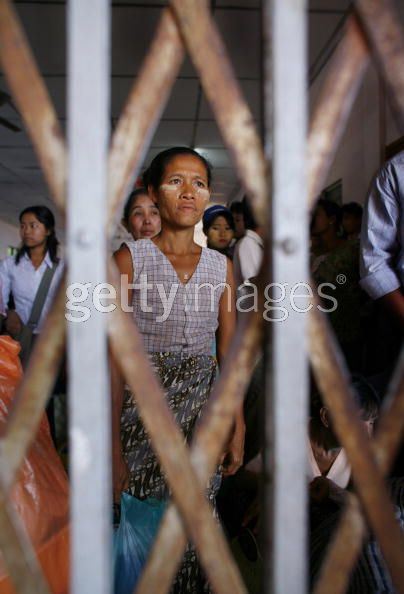
But....say you're a woman from a developing country where abortion is highly illegal and clandestine. Suppose you now live in America, but don't speak a lick of English and are completely reliant upon strangers, friends, relatives to interpret for you. Assume you're from a country where already an immense amount of stigma (making the US run-of-the-mill stigma look pale in comparison) surrounds abortion. You must risk speaking to a stranger - from your community - to translate that you need an abortion.

...Think about that for a moment. Just let that sink into your heart. How would you feel? How hard would that be for you? How scary would it be to tell a complete stranger your needs and desires? Could you trust this interpreter from your community? Could you trust that person to maintain your privacy and not divulge your information to other community members? Family? Husband? Could you trust this person to do their job and actually tell the healthcare worker your need to have an abortion? Now...imagine how brave and how difficult it must be to put your trust in all these strangers and not have a clue about the outcome. Not know if the abortion will be safe. If you'll survive. If anyone will be compassionate or understanding. Imagine the power these strangers have over you. The power of the interpreter. The power our medical institution has you. The power the stigma so embedded in our own country has over you.

I worry about these women. Often. I worry they don't know their rights: that their lovers don't have to give permission for them to have abortions; that she can access healthcare in a safe way; that abortion is legal; that she will be okay - that she will not die; that abortion providers will do everything they can to ensure she understands her procedure and understands how to access us if needed afterwards.

Yet, how easy would it be for her, really? I've been working with a woman who is from a country where it's difficult to find a pro-choice interpreter. A country where no one talks about abortion. Where women are regarded very little. Where men have all the control. She doesn't speak English. So, through the interpreter, I tell her, to call me if she needs me. The reality is, though, how would she call me if she needed me? How would I understand her? How would I help her? Of course, I'd find an interpreter to translate our conversation. Yet, still then, I wonder if the interpreter is being accurate in the information being translated - let alone kind and compassionate.

I feel for these women. I have compassion. And even some empathy regarding what it's like being a stranger in a new land. Without much help. And it's not fun. It's scary and hard. And. Well. We're thinking of them here in Abortionland.